The Visual Poetry of Islamic Civilization
Islamic art represents one of humanity's most sophisticated visual traditions. Spanning over fourteen centuries and stretching across three continents, it encompasses an extraordinary range of forms — from the intimate beauty of a Quran manuscript to the monumental grandeur of the Alhambra.
At the heart of Islamic art lies a fundamental philosophical principle: the material world is a reflection of divine beauty. The artist's task is not to imitate nature but to evoke the underlying patterns and harmonies that reveal the Creator's hand in all things. This is why Islamic art tends toward abstraction, geometry, and pattern rather than figurative representation.
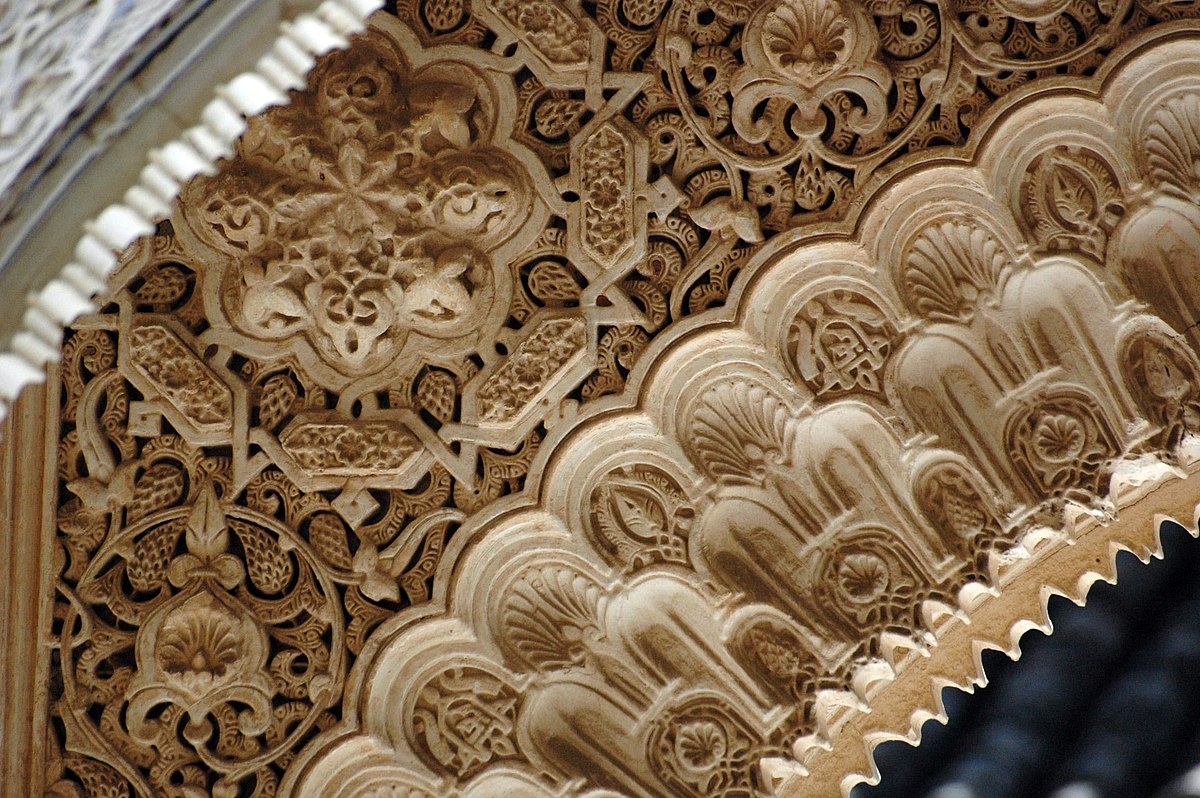
The arabesque — the flowing, interlacing vegetal patterns that adorn countless Islamic buildings and objects — embodies this principle beautifully. These patterns grow and multiply endlessly, suggesting the infinite nature of divine creation. Each tendril and leaf speaks of abundance, renewal, and the ceaseless creativity of the natural world.
Islamic geometric patterns represent perhaps the most mathematically sophisticated decorative tradition in art history. Using only a compass and straightedge, master geometers created patterns of astonishing complexity — tessellations, star patterns, and quasicrystalline structures that modern mathematicians have only recently begun to fully understand.
The Alhambra palace in Granada, Spain, stands as perhaps the supreme achievement of Islamic decorative art. Every surface is covered with intricate patterns of stucco, tile, and carved wood, creating an environment that one scholar described as 'a poem in stone' — a three-dimensional meditation on beauty, order, and the presence of the divine.
Today, Islamic art continues to inspire contemporary artists, designers, and architects worldwide. Its principles of harmony, proportion, and the creative use of pattern offer a visual language that speaks directly to the soul — reminding us that beauty, in its deepest sense, is always a reflection of something greater than ourselves.


